
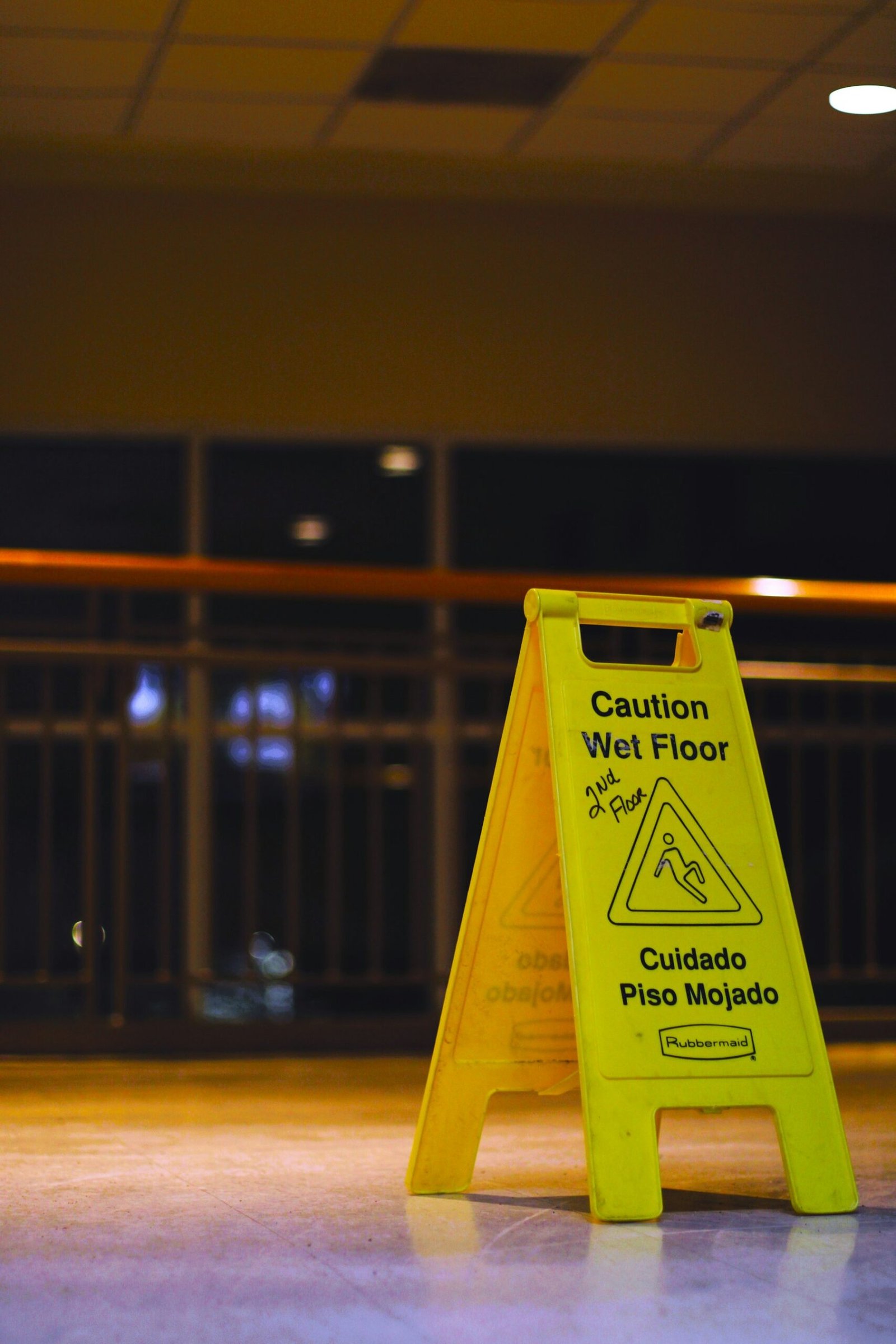
A slip and fall accident in Toms River can happen in a supermarket, restaurant, apartment building, parking lot, office, sidewalk, or private home. A fall may cause anything from a minor bruise to a fracture, head injury, or long-term mobility problem. When the incident involves a dangerous property condition, an injured person may wonder whether the owner, tenant, manager, or another party is legally responsible and whether a claim is worth investigating.
New Jersey premises liability law is fact-specific. A fall does not automatically prove negligence, and an injury alone does not establish who was legally responsible. The condition of the property, the relationship between the parties, who controlled the area, what the responsible party knew or should have known, and the cause of the injury can all matter. This guide explains general New Jersey principles and practical steps for someone considering a slip and fall attorney in Toms River. It is educational information, not legal advice or a finding about any particular claim.
What Does a Slip and Fall Attorney Do?
A slip and fall attorney investigates whether a property-related hazard may have caused an injury and whether a person or organization had a legal duty to address it. The work can include reviewing the incident report, photographs, witness statements, medical records, maintenance logs, inspection schedules, video footage, and insurance communications.
An attorney may also identify the potentially responsible parties, explain the legal issues, communicate with insurers, evaluate damages, and advise whether negotiation or litigation is appropriate. The facts and evidence determine what steps make sense. Not every fall creates a valid premises liability claim, and the outcome cannot be guaranteed.
Where Slip and Fall Accidents Can Occur
Common settings include commercial and residential properties. Examples include:
- Grocery stores and retail shops with spills, leaks, or debris on the floor.
- Restaurants where food, drink, or grease makes a walkway slippery.
- Apartment complexes with broken steps, loose handrails, or poor lighting.
- Parking lots and sidewalks with uneven pavement, ice, standing water, or potholes.
- Hotels and event venues with damaged flooring or inadequate warning signs.
- Workplaces and office buildings with cluttered paths or poorly maintained stairs.
The setting matters because different parties may own, occupy, lease, maintain, or control the area. The property owner is not necessarily the only possible defendant. A tenant, property manager, maintenance contractor, snow-removal company, or another entity may have responsibilities under the facts and applicable agreements.
New Jersey Premises Liability: The Basic Questions
Premises liability is the area of law dealing with injuries connected to the condition or use of property. New Jersey courts have discussed the duties that may apply to owners and occupiers, including the relationship between the injured person and the property controller. The New Jersey Courts’ educational resource, Premises Liability Law, explains that a person must establish a legally recognized duty, a breach of that duty, and a causal connection to the injury.
In a typical slip and fall investigation, the questions may include:
- Was there a dangerous condition, such as a spill, broken step, or uneven surface?
- Did the defendant own, occupy, maintain, or control the area?
- What duty of care applied to the injured person in that setting?
- Did the responsible party create the condition, know about it, or have enough time that it should reasonably have been discovered?
- Was the hazard a factual and legal cause of the fall and resulting injury?
- Did the injured person or another party contribute to the accident?
These are not boxes that can be answered from the fact of a fall alone. Evidence, case law, statutes, and the specific relationship between the parties are important.
Actual Notice and Constructive Notice
One issue in many premises cases is whether the property controller knew, or should reasonably have known, about the hazard. Actual notice generally refers to direct knowledge, such as a report from an employee or a previous complaint. Constructive notice concerns whether the condition existed long enough, or was sufficiently apparent, that a reasonable inspection could have discovered it.
For example, a recently spilled drink may create a different notice question from a leaking freezer that has left a wet area for an extended period. A broken stair tread that appears in prior maintenance reports may raise different questions from a defect that occurred moments before a visitor arrived. The actual facts, inspection records, witness accounts, and photographs can be critical.
Do not assume a warning sign automatically eliminates responsibility, or that the absence of a sign automatically proves a case. The full circumstances matter, including whether the warning was visible and whether reasonable steps were taken to address the underlying condition.
What to Do Immediately After a Slip and Fall
Personal safety and medical care come first. A person who has fallen may not immediately recognize the seriousness of a head, back, or joint injury. Seek appropriate medical attention, especially if there is significant pain, a head impact, loss of consciousness, dizziness, numbness, difficulty walking, or symptoms that worsen.
When it is safe and practical:
- Report the incident. Notify the store manager, property manager, building owner, or responsible staff member and ask that the incident be documented.
- Record the location. Note the exact place, such as the aisle, entrance, stairwell, sidewalk section, or parking area.
- Photograph the hazard. Take wide and close-up images of the condition, nearby warning signs, lighting, and the surrounding area, if you can do so safely.
- Identify witnesses. Request names and contact information from people who saw the fall or the hazard.
- Preserve relevant items. Keep the shoes and clothing worn during the incident in their existing condition if they may be relevant.
- Follow medical instructions. Keep appointment records, treatment notes, prescriptions, and receipts.
- Write down what happened. Record the date, time, weather, lighting, events before the fall, symptoms, and names of people you spoke with.
Do not put yourself at risk to collect evidence. If you are injured, prioritize care and ask someone else to document the scene where appropriate.
Why Photographs and Video Can Matter
A hazard may be cleaned, repaired, moved, or affected by weather soon after an incident. Photographs taken near the time of the fall can help show its appearance, position, visibility, and surroundings. A close-up image may show a crack or spilled liquid, while a wider image may show the lighting, walkway, nearby displays, or lack of a visible warning.
Surveillance video can be particularly important, but retention periods vary and footage may be overwritten. An attorney may send an appropriate preservation request where warranted. A person should not attempt to access a business’s private security system or interfere with its operations.
Medical Records and Damages
Medical documentation helps establish the nature of an injury and the treatment received. Depending on the case, damages may include medical expenses, future treatment, lost income, reduced earning capacity, pain, suffering, and limitations on ordinary activities. The legal availability and value of any category depend on proof and the facts of the claim.
Keep copies of emergency department records, physician notes, imaging reports, physical therapy records, pharmacy receipts, work absence documentation, and insurance statements. Follow prescribed care and communicate honestly with providers about symptoms. A gap in treatment may raise questions, but the effect depends on the explanation and the medical evidence.
New Jersey’s Personal Injury Filing Deadline
New Jersey generally requires an action for personal injury caused by another person’s wrongful act, neglect, or default to be filed within two years after the cause of action accrues, subject to exceptions and other legal rules. The general statutory provision is N.J.S.A. 2A:14-2. This is an important deadline, but it should not be treated as a personal calculation of the last safe date to act.
Different rules may apply depending on the injured person’s age, the identity of the defendant, the type of claim, or other circumstances. Claims involving public entities can have additional notice procedures and shorter time limits. A person injured on public property or in an incident involving a government entity should seek legal guidance promptly rather than assuming the ordinary two-year rule is the only deadline.
Comparative Negligence in New Jersey
New Jersey follows a modified comparative negligence framework. Under N.J.S.A. 2A:15-5.1, a plaintiff’s own negligence does not automatically bar recovery if it is not greater than the negligence of the party or parties against whom recovery is sought; damages are reduced by the percentage of fault attributed to the plaintiff. The statute is available through the New Jersey Legislature’s statutory text.
In practical terms, if a jury attributes a portion of the fault to the injured person, the potential damages may be reduced by that percentage. If the plaintiff’s negligence is greater than the defendant’s negligence as defined by the statute, recovery may be barred. How fault is evaluated depends on the evidence, and an attorney should assess the specific facts rather than applying a percentage based on assumptions.
What If the Fall Happened in a Store or Restaurant?
In a business setting, important evidence may include employee reports, cleaning schedules, inspection records, maintenance logs, spill response procedures, customer complaints, and surveillance footage. The business’s legal responsibility may depend on whether it created the hazard, had actual notice, or should have discovered it through reasonable inspections.
Tell the manager that an incident occurred and ask how to obtain a copy or reference number for the incident report. Do not assume the report is a complete record of the event. You can keep your own contemporaneous notes and photographs where possible.
What If the Fall Happened at an Apartment Complex or Rental Property?
Residential falls may involve stairs, walkways, parking areas, entryways, lighting, railings, ice, or water intrusion. Responsibility can depend on lease terms, control of the area, maintenance duties, prior complaints, and applicable law. A landlord may not be responsible for every condition inside a tenant’s private space, and an owner may not be the only party with relevant duties.
Preserve maintenance requests, emails, text messages, photographs of prior conditions, and any notices given to a landlord or manager. If a defect was reported before the fall, the timing and content of that report may be relevant. Avoid altering the property or attempting repairs that could affect evidence, except where immediate safety requires action.
How to Choose a Slip and Fall Attorney in Toms River
When speaking with a lawyer, look for experience with New Jersey premises liability and personal injury claims. The attorney should be able to explain the issues that may arise in a case like yours, the evidence that could be important, and the fee arrangement. A consultation is an opportunity to understand how the lawyer would investigate your particular circumstances; it is not a promise that a claim will succeed.
Consider asking:
- How often do you handle New Jersey slip and fall or premises liability cases?
- What facts would you need to evaluate who controlled the property and whether there was notice of the hazard?
- What evidence should be preserved immediately?
- Could any special notice deadline apply if a public entity is involved?
- How are legal fees, case expenses, and costs handled?
- Who will be my primary contact during the case?
- What factors could affect the timeline or value of a claim?
- What should I avoid saying or signing while the claim is being evaluated?
Ask for the fee agreement in writing and read it carefully. Confirm how expenses are treated if the case does not result in a recovery. You should understand who is responsible for decisions and how settlement offers will be communicated.
Insurance Adjusters and Early Settlement Offers
An insurance adjuster may contact an injured person to request a statement, records, or documents. A prompt and accurate report of the incident can be important, but be careful about guessing, speculating, or minimizing symptoms before the full medical picture is clear. Do not sign a release or accept a settlement without understanding what rights may be affected.
Keep copies of all correspondence. If you are represented, ask your attorney how communications should be handled. If you are not represented, you can ask the insurer to put requests in writing and take time to review them. Never provide false or exaggerated information.
What Can Weaken a Slip and Fall Claim?
Every case is different, but common challenges can include:
- Insufficient evidence about the hazard or where the fall occurred.
- Unclear proof that the defendant owned, controlled, or maintained the area.
- Limited evidence that the responsible party created or knew of the condition, or should have discovered it.
- Medical records that do not connect the reported injury to the fall.
- Conflicting witness accounts or photographs taken long after the condition changed.
- Questions about comparative fault or whether the injured person was distracted.
- Missed deadlines or failure to follow special claim procedures.
These are issues to evaluate, not automatic reasons that a person has no claim. An attorney can explain how the available evidence affects each point.
Frequently Asked Questions
Do I need an attorney after every slip and fall?
No. The need for legal advice depends on the severity of the injury, the circumstances of the fall, disputed responsibility, insurance issues, and possible deadlines. A serious injury or a disputed property condition is a reason to consider a prompt consultation.
Does a fall in a store automatically make the store responsible?
No. A claim generally requires proof of the applicable duty, breach, causation, and damages. The facts about the hazard and the store’s notice or conduct matter.
How long do I have to file a slip and fall lawsuit in New Jersey?
New Jersey generally has a two-year personal injury limitations period, but exceptions and separate notice rules may apply. Do not rely on a general summary to calculate your deadline.
What if I was partly responsible for my fall?
New Jersey’s comparative negligence statute may reduce damages based on the plaintiff’s share of fault and can bar recovery if the plaintiff’s negligence is greater than the defendant’s under the statute. The evidence determines how fault is assessed.
Should I report the fall even if I feel okay?
Reporting the incident can create a contemporaneous record. Some injuries become apparent later, so seek medical advice if symptoms develop or worsen.
What evidence should I keep?
Preserve photographs, witness information, incident report details, medical records, receipts, work absence records, and communications with the property or insurer. Keep items such as shoes and clothing if they may be relevant.
Conclusion
A slip and fall claim in Toms River requires a careful review of the hazard, property control, notice, causation, injuries, and applicable New Jersey deadlines. Seek appropriate medical care, document the scene when safe, preserve records, and avoid assuming that a fall automatically proves liability. A qualified New Jersey premises liability attorney can evaluate the facts, explain the comparative negligence rules, and identify any special filing or notice requirements that may apply. Acting promptly helps protect evidence and gives you time to understand your legal options.
