
Introduction
Choosing a meaningful name can be one of the most exciting parts of preparing for a baby. Russian names for boys offer a fascinating blend of history, culture, strength, and timeless charm. From classic choices like Ivan and Mikhail to distinctive options like Yaroslav and Rodion, these names carry stories that stretch across generations.
Many Russian boy names also have beautiful meanings linked to courage, victory, peace, faith, or leadership. You’ll also find interesting Russian naming traditions, including patronymics and affectionate diminutives. Whether you’re searching for unique Russian boy names or traditional favorites, exploring their origins, meanings, Cyrillic spellings, and pronunciations can help you discover a name that feels both authentic and memorable.
Popular Russian Boy Names and Their Meanings
Russian naming traditions include names from Slavic languages, Greek, Hebrew, Latin, and other historical sources. Eastern Orthodox Christianity strongly influenced the Russian name pool, especially through saints’ names.
Most Popular Russian Names for Boys
Names such as Ivan, Mikhail, Aleksandr, Dmitri, Nikolai, Maksim, Pavel, and Sergei remain widely recognizable. Their Latin spellings can vary because Russian Cyrillic does not always map to English letters in one fixed way.
| Name | Gender | Origin | Religion | Meaning | Popularity (2026) | Pronunciation | Trend Category |
| Aleksandr | Boy | Russian, Greek | Christian | Defender of men | Popular | ah-lek-SAHN-dr | Classic |
| Ivan | Boy | Russian, Hebrew | Christian | God is gracious | Popular | ee-VAHN | Traditional |
| Maksim | Boy | Russian, Latin | Christian | Greatest | Popular | mak-SEEM | Modern |
| Mikhail | Boy | Russian, Hebrew | Christian | Who is like God? | Popular | mee-kha-EEL | Classic |
| Nikolai | Boy | Russian, Greek | Christian | Victory of the people | Popular | nee-ko-LAI | Traditional |
| Pavel | Boy | Russian, Latin | Christian | Small, humble | Popular | pah-VYEL | Classic |
| Sergei | Boy | Russian, Latin | Christian | Servant or attendant | Popular | ser-GAY | Traditional |
| Dmitri | Boy | Russian, Greek | Christian | Devoted to Demeter | Popular | dmee-TREE | Classic |
These popularity labels describe broad contemporary familiarity rather than an official 2026 national ranking. Russia’s Federal State Statistics Service maintains official demographic datasets, but popularity can differ by year and region.
Popular Russian Baby Boy Names With Strong Meanings
A name can carry more than a pleasant sound. Aleksandr connects with the idea of defending people, while Maksim comes from a Latin root meaning “greatest.” Nikolai combines the ideas of victory and people through its Greek origin.
Dmitri offers another interesting example. The Russian form comes from the Greek Demetrios and has historical Orthodox usage. Its traditional meaning relates to Demeter, the ancient Greek goddess associated with agriculture.
Famous Russian Male Names and Their Origins
Russian history and literature have helped certain names travel far beyond Russia. Mikhail appears in religious and literary contexts, while Dmitri has belonged to princes, writers, scientists, athletes, and political figures.
The name Dmitri also illustrates how a name can cross cultures. Its Russian form has Greek roots, while its numerous English spellings developed through different transliteration practices.
Also Read: Cute Names for Boys
Unique Russian Boy Names for a Distinctive Choice
If familiar names feel too predictable, Russian naming traditions offer plenty of unusual choices. Some come from older Slavic traditions, while others reflect religious, literary, or historical influences.
Rare Russian Names for Boys With Meanings
Arkady, Rodion, Tikhon, and Yaroslav can provide a more distinctive sound. Yaroslav has Slavic roots associated with ideas of fierceness, glory, or fame, depending on the interpretation of its historical elements.
Tikhon has Greek origins and became established in Russian through Christian tradition. Rodion likewise has a long history in Russian usage and carries a distinctly literary Russian feel.
| Name | Gender | Origin | Religion | Meaning | Popularity (2026) | Pronunciation | Trend Category |
| Arkady | Boy | Russian, Greek | Christian | From Arcadia | Rare | ar-KAH-dee | Vintage |
| Rodion | Boy | Russian, Greek | Christian | Related to rose or Rhodian | Rare | ro-dee-ON | Stylish |
| Tikhon | Boy | Russian, Greek | Christian | Fortune, fate | Rare | tee-KHON | Traditional |
| Yaroslav | Boy | Slavic, Russian | Christian/Cultural | Fierce glory | Rising | yar-oh-SLAHV | Strong |
| Svyatopolk | Boy | Old Slavic | Slavic/Cultural | Sacred ruler | Very Rare | svya-to-POLK | Historical |
| Gavriil | Boy | Russian, Hebrew | Christian | God is my strength | Rare | gav-ree-EEL | Spiritual |
Uncommon Slavic Boy Names Worth Discovering
Not every Slavic name is specifically Russian. Slavic languages span several countries, so a name can belong to a broader Slavic naming tradition while still appearing in Russian contexts.
Yaroslav, Vladimir, and Svyatopolk demonstrate this older layer of naming. Vladimir, for example, has deep Slavic roots and a long history in Eastern Europe. Such names can feel especially meaningful if you value Slavic heritage.
Short and Distinctive Russian Male Names
Short names can work particularly well when paired with a longer surname. Lev is an excellent example because it is brief, striking, and associated with the Russian word for “lion,” although its historical name origin is more complex.
Oleg also offers a compact choice with an unmistakably Eastern European character. Ilya feels softer and more lyrical, while Yuri has an established international presence.
Also Read: Unique Mexican Boy Names
Modern Russian Names for Boys
Modern naming does not mean abandoning history. Many modern Russian boy names retain centuries-old roots while fitting comfortably into contemporary life.
Contemporary Russian Boy Names
Artyom, Maksim, Matvei, Kirill, Daniil, and Roman are examples of names that can feel both familiar and current. Their exact popularity can vary by region and birth cohort.
A modern name may also gain international appeal because its Latin spelling resembles a familiar English form. Maksim and Maxim are a good example. Both can represent the same underlying Russian name in different transliteration settings.
Modern Russian Baby Names With International Appeal
International families often consider how a name will look and sound outside Russia. Aleksandr can become Alexander in an English-language context, while Nikolai may appear as Nikolay or Nicholas depending on the language and naming tradition.
This distinction matters because transliteration isn’t the same as translation. Russian names written in Latin letters can have several legitimate spellings. Дмитрий, for example, may appear as Dmitri, Dmitriy, or Dmitrii.
Modern Nicknames and Diminutives for Russian Boys
Russian names have a particularly rich system of diminutives. A formal name may transform into an affectionate everyday form used by relatives, friends, or children.
Aleksandr can become Sasha, Dmitri can become Dima, Ivan can become Vanya, and Nikolai can become Kolya. These forms aren’t simply random nicknames. They belong to established Russian naming customs.
| Formal Name | Cyrillic | Common Diminutive | Pronunciation |
| Aleksandr | Александр | Sasha | SAH-sha |
| Dmitri | Дмитрий | Dima | DEE-ma |
| Ivan | Иван | Vanya | VAN-ya |
| Mikhail | Михаил | Misha | MEE-sha |
| Nikolai | Николай | Kolya | KOH-lya |
| Vladimir | Владимир | Vova | VOH-va |
| Pavel | Павел | Pasha | PAH-sha |
| Grigory | Григорий | Grisha | GREE-sha |
Also Read: Spanish Middle Names
Traditional Russian Male Names
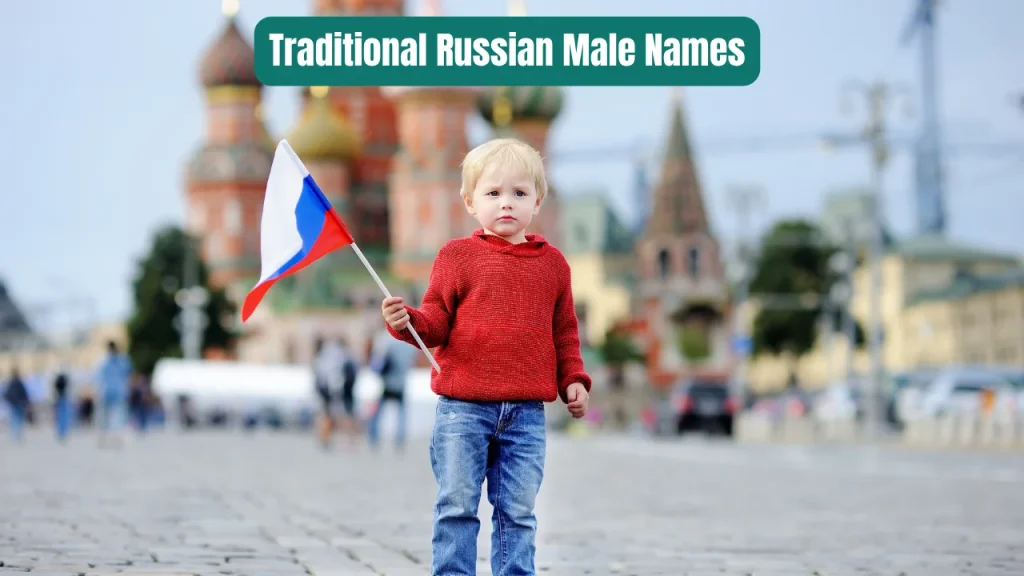
Classic names can give a baby name a sense of continuity. Many traditional Russian names survived because religious calendars, family customs, literature, and cultural memory kept them in circulation.
Classic Russian Names for Boys
Vladimir, Fyodor, Pavel, Viktor, Yuri, Boris, and Konstantin each have a recognizable historical character. Some are Slavic in origin, while others entered Russian through Greek, Latin, Hebrew, or other languages.
Fyodor, for example, corresponds to the Greek Theodoros and carries the meaning “gift of God.” Pavel represents the Russian form of Paul, while Viktor comes from a Latin word associated with victory.
Old Russian and Slavic Male Names
Older Slavic names often used meaningful elements connected with fame, glory, strength, peace, or leadership. Vladimir and Yaroslav demonstrate this tradition particularly well.
However, historical origin deserves careful attention. A name appearing in modern Russia does not necessarily originate in the Russian language. Russian naming developed through centuries of contact with Byzantine Christianity and neighboring cultures.
Russian Orthodox Boy Names and Naming Traditions
Eastern Orthodox Christianity played a major role in the development of traditional Russian given names. Many names entered Russian through saints and religious texts, especially names with Greek origins.
This explains why a distinctly Russian name can sometimes have a Greek, Hebrew, or Latin etymology. The cultural pathway matters. A name’s present-day Russian identity doesn’t require its earliest linguistic root to be Russian.
Also Read: Girl Names That Start With K
Russian Boy Names With Dark or Mysterious Meanings
Some parents search for names with a darker atmosphere. However, name websites often exaggerate meanings by attaching modern fantasy interpretations to ordinary historical names.
Russian Boy Names Associated With Darkness and Mystery
There are relatively few traditional Russian names whose literal etymology simply means “darkness.” Instead, mysterious appeal often comes from historical figures, folklore, sound, or associations with strength and conflict.
For a darker aesthetic, names such as Oleg, Boris, Rodion, and Viktor may feel more dramatic. Their actual meanings should remain separate from their fictional or modern associations.
Powerful Russian Male Names With Fierce Meanings
Viktor has an especially clear connection with victory. Yaroslav combines old Slavic elements traditionally connected with fierceness and glory. Vladimir carries an old Slavic structure connected with rule and peace or fame, depending on etymological interpretation.
These names demonstrate why name meanings should be researched carefully. A dramatic-sounding name doesn’t automatically have a violent or sinister meaning.
Mysterious Slavic Names From History and Folklore
Older Slavic naming traditions contain names that can sound unusual to modern English speakers. Svyatopolk is one striking example, combining elements associated with sacredness and rule.
Historical and folklore associations can make such names feel mysterious. Still, folklore should not be presented as literal etymology. The distinction keeps a baby-name guide accurate rather than merely entertaining.
Also Read: Middle Names That Start With J
Russian Boy Names Written in Russian
Russian is normally written in Cyrillic. Therefore, seeing a name in its original script can help readers understand its authentic form before choosing an English spelling.
Russian Names in Cyrillic With English Spellings
| English Form | Russian Cyrillic | Meaning | Common Variation |
| Aleksandr | Александр | Defender of men | Alexander |
| Aleksei | Алексей | Defender | Alexei |
| Artyom | Артём | Whole, sound | Artem |
| Dmitri | Дмитрий | Devoted to Demeter | Dmitry |
| Fyodor | Фёдор | Gift of God | Fedor |
| Maksim | Максим | Greatest | Maxim |
| Matvei | Матвей | Gift of God | Matvey |
| Mikhail | Михаил | Who is like God? | Michael |
| Nikolai | Николай | Victory of the people | Nikolay |
| Sergei | Сергей | Servant or attendant | Sergey |
Russian Boy Name Pronunciation and Transliteration
English spelling can disguise the original pronunciation. This happens because Cyrillic letters and English letters don’t have a perfect one-to-one relationship.
Different transliteration systems can produce forms such as Sergei and Sergey or Dmitri and Dmitry. Neither spelling automatically makes the underlying Russian name different. The context determines which Latin rendering is preferred.
Formal Russian Names and Their Nicknames
Russian naming customs create a fascinating contrast between official and affectionate forms. Someone named Aleksandr may be called Sasha, while Vladimir may become Vova in familiar conversation.
This system gives families considerable flexibility. The formal name can suit documents and professional settings, while a diminutive can create warmth within close relationships.
Also Read: Celtic Girl Names
Russian Male Names and Surnames
A Russian full name can look more complicated than a typical English name. Once the structure becomes clear, however, the system is surprisingly logical.
How Russian Full Names Work
A traditional Russian full name generally contains a given name, patronymic, and family surname in that order. The patronymic identifies the person’s father and occupies an important place in formal naming.
For example, a fictional boy might be named Ivan Sergeyevich Petrov. Ivan is his given name, Sergeyevich is his patronymic, and Petrov is his family name. This structure is an important part of Russian naming culture.
Common Russian Surnames for Boys and Men
Russian surnames often have recognizable masculine and feminine forms. Ivanov, Petrov, Smirnov, Volkov, and Sokolov are familiar examples of Russian family names.
Some surnames developed from personal names, occupations, places, nicknames, or descriptive words. The surname Dmitriev, for instance, derives from the male given name Dmitry and essentially carries the sense of “Dmitry’s.”
Russian Patronymics and Father-Based Names
A patronymic is formed from the father’s given name. Common masculine endings include -ovich and -evich, although actual formation depends on the father’s name and Russian grammatical patterns.
This means the patronymic isn’t simply a middle name. It communicates family lineage and forms part of the traditional three-part Russian naming system.
Also Read: Australian Boy Names
How to Choose Russian Names for Boys?
The best name isn’t necessarily the rarest or most fashionable. Instead, look for a name whose meaning, pronunciation, cultural connection, and family fit all make sense together.
Consider Meaning, Heritage and Cultural Context
Start with the name’s actual etymology. If you love a name because it supposedly means “warrior,” verify that claim before using it. Online baby-name lists sometimes simplify complicated histories into one attractive word.
You should also consider whether you want a specifically Russian name or a broader Slavic choice. That distinction can make your final selection more culturally precise.
Check Pronunciation, Cyrillic and English Spellings
Write the name in Cyrillic before making your final choice. Then check its Latin transliteration and say it aloud several times.
This small exercise can reveal practical issues early. A beautiful Russian name may have several English spellings, and one version might work better for your family than another.
Pair Russian First Names With Middle and Family Names
Consider the complete name rather than judging the first name alone. Pay attention to syllable count, initials, pronunciation, patronymic structure, and surname rhythm.
For international families, also think about how teachers, relatives, and official systems might pronounce or spell the name. A little planning now can prevent repeated corrections later.
FAQs
What is a cool Russian name for a boy?
Maksim, Artyom, and Roman are cool Russian boy names with modern sounds. For something more distinctive, Yaroslav has a strong Slavic character.
What are some classic Russian names?
Ivan, Mikhail, Aleksandr, Nikolai, Pavel, and Dmitri are classic Russian names. Many have long histories and remain familiar across generations.
What is a tough Russian name?
Viktor is a strong choice because its Latin origin relates to “victor” or “conqueror.” Yaroslav also has a powerful Slavic character.
What is a super Russian name?
Ivan is one of the most recognizable Russian male names. Mikhail, Dmitri, Nikolai, and Vladimir also have strong associations with Russian culture and history.
What is the rarest Russian name?
There isn’t one officially recognized “rarest” Russian name. Historical choices such as Svyatopolk are extremely uncommon today and offer a distinctive Slavic character.
What’s a funny Russian name?
There isn’t a Russian name that is inherently funny. Some traditional names may sound amusing to English speakers because pronunciation or meaning changes across languages.
Also Read: Last Names That Start With N
Final Thoughts
The appeal of Russian names for boys comes from their remarkable range. You can choose a timeless Orthodox name, an old Slavic name, a modern international option, or an uncommon historical choice.
Names such as Ivan and Mikhail offer familiar tradition. Yaroslav and Svyatopolk provide stronger Slavic character, while Maksim and Artyom can feel contemporary. The right choice ultimately depends on the meaning and cultural connection you want the name to carry.
Most importantly, don’t judge a Russian name only by its English spelling. Look at the original Cyrillic form, historical origin, pronunciation, diminutives, and cultural usage. That deeper context can turn a simple name search into a genuinely meaningful choice.

Sophia Miller is a versatile writer who explores lifestyle, technology, business, health, and education topics. She is passionate about delivering clear, engaging, and informative content that helps readers stay informed and inspired.
1 thought on “Russian Names for Boys: Meanings, Origins, Traditions, and Unique Ideas”