
Introduction
Finding unique Mexican boy names can be an exciting journey through culture, history, and language. Mexican naming traditions blend Spanish influences with rich Indigenous heritage, creating choices that feel both familiar and distinctive. Whether you’re searching for rare Mexican boy names, a strong traditional choice, or a short name with a modern sound, there are plenty of options to explore.
Many Mexican baby boy names also carry meaningful connections to faith, nature, courage, family, or historical figures. In this guide, you’ll discover names with their meanings, origins, pronunciation, and cultural background. You’ll also find vintage choices and lesser-known Indigenous names that can help you choose something memorable, authentic, and special for your little boy.
Rare and Uncommon Mexican Boy Names
Distinctive names with Mexican character
Rare Mexican boy names can give your child an identity that feels personal without becoming difficult to use. Names such as Cuauhtémoc, Tenoch, Tonatiuh, and Yaotl connect strongly with Indigenous Mexican history. Meanwhile, uncommon Spanish choices can offer a softer and more familiar sound.
The key difference lies between rarity and invention. A genuinely rare name has an established linguistic or cultural history. An invented spelling may look unusual but have little connection to Mexican naming traditions.
Indigenous roots worth exploring
Mexico has many Indigenous languages, so there isn’t one single category called “Indigenous Mexican.” Nahuatl, Maya, Zapotec, Mixtec, Purépecha, and other languages have distinct histories. That diversity matters when researching a name.
Nahuatl names receive particular attention because Nahuatl remains widely spoken in Mexico. Modern references include names such as Cuauhtémoc, Tenoch, Tonatiuh, Ehécatl, and Nezahualcóyotl. Their meanings and pronunciations can vary according to linguistic analysis and historical sources.
Rare Mexican names to consider
| Name | Gender | Origin | Religion | Meaning | Popularity (2026) | Pronunciation | Trend Category |
| Acatl | Boy | Nahuatl, Mexico | Indigenous | Reed | Rare | AH-kahtl | Ancient |
| Atlahua | Boy | Nahuatl, Mexico | Indigenous | Associated with water and spear thrower | Very Rare | aht-LAH-wah | Mythological |
| Cuauhtémoc | Boy | Nahuatl, Mexico | Indigenous | Descending eagle | Rare | kwow-TEH-mok | Historical |
| Tenoch | Boy | Nahuatl, Mexico | Indigenous | Stone prickly pear | Rare | TEH-noch | Ancient |
| Yaotl | Boy | Nahuatl, Mexico | Indigenous | Warrior | Rare | YAH-ohtl | Strong |
These names stand apart because they carry historical or linguistic substance. Tenoch, for example, is associated with the stone prickly pear and the historical tradition surrounding Tenochtitlan. Cuauhtémoc also has a strong historical association with the Mexica ruler.
Also Read: Spanish Middle Names
Unique Mexican Boy Names With Meanings
Names that tell a story
Meaning can transform a simple name into a family story. Some Mexican names have Spanish or Latin roots, while others come from Hebrew, Greek, Germanic, or Indigenous languages. Therefore, “Mexican” often describes cultural use rather than a single linguistic origin.
For example, Mateo comes from Hebrew through Spanish and means “gift of God.” Alejandro has Greek roots and carries the meaning “defender of mankind.” These names demonstrate how Mexican naming culture draws from several linguistic streams.
Meaningful choices from different traditions
| Name | Gender | Origin | Religion | Meaning | Popularity (2026) | Pronunciation | Trend Category |
| Alejandro | Boy | Spanish, Greek | Christian tradition | Defender of mankind | Popular | ah-leh-HAHN-dro | Traditional |
| Mateo | Boy | Spanish, Hebrew | Christian tradition | Gift of God | Very Popular | mah-TEH-o | Modern |
| Gabriel | Boy | Spanish, Hebrew | Christian | God is my strength | Popular | gah-bree-EL | Spiritual |
| Rafael | Boy | Spanish, Hebrew | Christian | God has healed | Popular | rah-fah-EL | Traditional |
| Nicolás | Boy | Spanish, Greek | Christian tradition | Victory of the people | Rising | nee-ko-LAHS | Stylish |
| Amado | Boy | Spanish, Latin | Christian tradition | Loved | Rare | ah-MAH-do | Vintage |
Current Mexican-name references consistently include Mateo, Santiago, Sebastián, José, and other Spanish forms alongside Indigenous choices. Meanings should still be checked against reliable linguistic sources because translations can differ.
Understanding name meanings carefully
Name websites sometimes simplify complicated etymologies. That can create attractive but inaccurate definitions. Indigenous names especially deserve careful treatment because an English gloss may represent only one interpretation of the original word.
For that reason, parents should distinguish between a literal translation, a traditional interpretation, and a modern baby-name meaning. This small distinction makes your research much more reliable.
Also Read: Girl Names That Start With K
Short and Memorable Mexican Boy Names
Simple names with strong sounds
Short Mexican boy names work beautifully when you want something easy to remember. They can also balance a long surname. Names such as Leo, Luis, Juan, José, Gael, and Diego have compact forms with recognizable Spanish pronunciation.
A short name doesn’t have to feel plain. Sound, rhythm, accent marks, and cultural history can give even a four-letter name considerable personality.
Short names for bilingual families
Bilingual families often think about pronunciation in more than one language. A name that sounds natural in Spanish may receive a different reading in English. That doesn’t make it unsuitable. It simply means parents should decide which pronunciation they want relatives and teachers to use.
Gael, Diego, Luis, and Leo are examples of short names that can move comfortably between many Spanish-speaking and English-speaking environments. Their compact structure also makes them easy to spell.
| Name | Gender | Origin | Religion | Meaning | Popularity (2026) | Pronunciation | Trend Category |
| Gael | Boy | Spanish usage, Celtic roots | Secular | Gaelic person | Popular | gah-EL | Modern |
| Luis | Boy | Spanish, Germanic | Christian tradition | Famous warrior | Popular | loo-EES | Traditional |
| Juan | Boy | Spanish, Hebrew | Christian | God is gracious | Very Popular | hwan | Classic |
| José | Boy | Spanish, Hebrew | Christian | God will add | Very Popular | ho-SEH | Traditional |
| Leo | Boy | Latin | Christian tradition | Lion | Rising | LEH-o | Modern |
| Diego | Boy | Spanish | Christian tradition | Traditionally linked with James | Popular | dee-EH-go | Stylish |
Popularity labels here are broad editorial categories rather than official national rankings. Actual usage differs between Mexico, Mexican-American communities, regions, generations, and individual families.
Also Read: Middle Names That Start With J
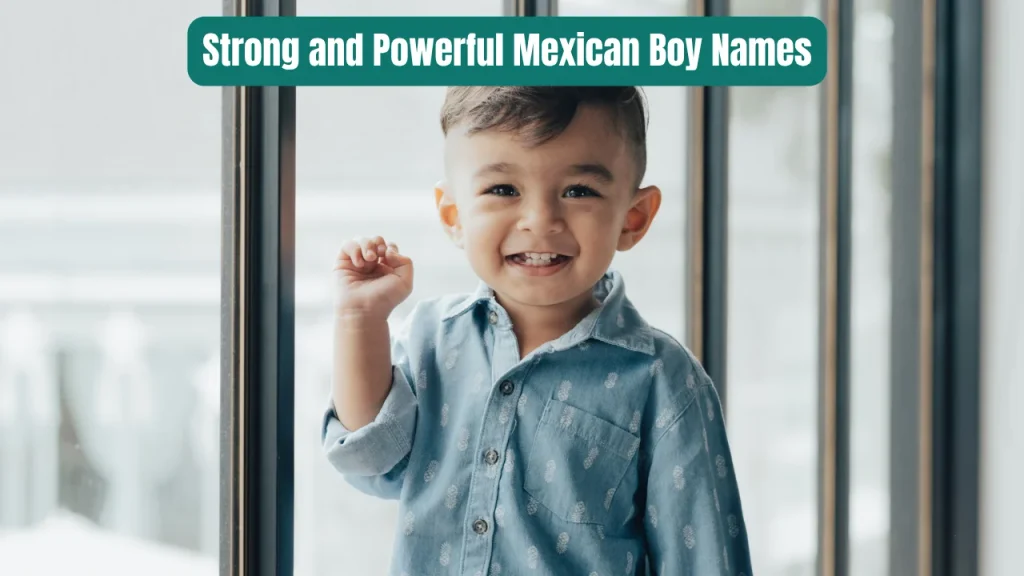
Strong and Powerful Mexican Boy Names
Names connected with courage and leadership
Strong Mexican boy names often draw their appeal from meanings associated with protection, courage, leadership, or military history. Alejandro means “defender,” while Luis carries a Germanic heritage associated with a famous warrior.
Indigenous traditions add another dimension. Yaotl is associated with the meaning “warrior,” while Cuauhtémoc carries the image of a descending eagle. Such names can create a striking connection between language and symbolism.
Powerful names with historical depth
Historical names can feel powerful because they carry more than a dictionary definition. They connect a child to people, places, literature, political history, or cultural memory. Nezahualcóyotl is one notable example, associated with the ruler and poet of Texcoco.
Parents should research these associations before choosing a historical name. A powerful story can enrich a name, but the story should be understood accurately rather than reduced to a decorative label.
| Name | Gender | Origin | Religion | Meaning | Popularity (2026) | Pronunciation | Trend Category |
| Yaotl | Boy | Nahuatl | Indigenous | Warrior | Rare | YAH-ohtl | Strong |
| Alejandro | Boy | Greek through Spanish | Christian tradition | Defender of mankind | Popular | ah-leh-HAHN-dro | Strong |
| Cuauhtémoc | Boy | Nahuatl | Indigenous | Descending eagle | Rare | kwow-TEH-mok | Historical |
| Fernando | Boy | Spanish, Germanic | Christian tradition | Brave journey or traveler | Rising | fehr-NAHN-do | Traditional |
| Rodrigo | Boy | Spanish, Germanic | Christian tradition | Famous ruler | Rising | roh-DREE-go | Royal |
| Nezahualcóyotl | Boy | Nahuatl | Indigenous | Fasting coyote | Very Rare | neh-sah-wahl-KOH-yotl | Historical |
Also Read: Celtic Girl Names
Traditional Mexican Boy Names With Historical Roots
Spanish and Catholic influence
Traditional Mexican naming reflects centuries of cultural interaction. Spanish forms of biblical and Christian names became deeply established, while Indigenous naming traditions continued across many communities.
José, Juan, Miguel, Rafael, Gabriel, and Santiago illustrate this religious influence. Compound names also became important, such as Miguel Ángel and José Luis. These combinations allow families to honor more than one person, saint, or naming tradition.
Indigenous and Spanish traditions together
Mexican naming cannot be reduced to Spanish names alone. Mexico contains numerous Indigenous languages and cultural traditions. Contemporary naming resources therefore separate Spanish-origin names from Nahuatl, Maya, and other Indigenous names rather than treating everything as one linguistic group.
That distinction helps parents choose a name with genuine cultural relevance. If your goal is to honor Indigenous heritage, research the specific language and community connected with the name.
Classic names that still feel distinctive
| Name | Gender | Origin | Religion | Meaning | Popularity (2026) | Pronunciation | Trend Category |
| Santiago | Boy | Spanish, Hebrew | Christian | Saint James | Very Popular | sahn-tee-AH-go | Traditional |
| Sebastián | Boy | Spanish, Greek | Christian tradition | Revered or venerable | Popular | seh-bahs-tee-AHN | Stylish |
| Emiliano | Boy | Spanish, Latin | Christian tradition | From the Aemilius family | Popular | eh-mee-lee-AH-no | Classic |
| Antonio | Boy | Spanish, Latin | Christian tradition | Traditionally linked with Antonius | Popular | ahn-TOH-nyo | Traditional |
| Javier | Boy | Spanish, Basque | Christian tradition | New house | Rising | hah-VYEHR | Stylish |
| Francisco | Boy | Spanish, Latin | Christian | Frenchman or free man | Traditional | frahn-SEES-ko | Vintage |
INEGI’s 2024 registered-birth statistics recorded Santiago as Mexico’s most registered male name that year, with 7,570 registrations. That figure refers specifically to registered births in 2024 and should not be treated as a 2026 popularity ranking.
Also Read: Australian Boy Names
Mexican Boy Names Inspired by the 1800s
Understanding nineteenth-century naming
Old Mexican boy names from the 1800s often reflect the religious and Spanish naming patterns of that period. José, Juan, Francisco, Antonio, Miguel, and Rafael fit the broader historical naming environment because their Spanish forms had long-standing Christian usage.
However, historical popularity is difficult to reconstruct without period birth registers. A name appearing in a nineteenth-century historical record proves historical use, but it doesn’t automatically prove that it was among the most common names.
Vintage names with renewed appeal
Vintage naming has become attractive to parents who want something established yet less predictable. Emiliano, Francisco, Vicente, and Ramón can create that feeling. Their older character gives them a different texture from newer international naming trends.
Vicente is particularly interesting because it has Spanish usage and a meaning connected with conquering or prevailing. Its sound also fits naturally within traditional Spanish naming patterns.
Also Read: Last Names That Start With N
Unique Mexican Boy Names From A to Z
A–F Mexican boy names
| Name | Gender | Origin | Religion | Meaning | Popularity (2026) | Pronunciation | Trend Category |
| Acatl | Boy | Nahuatl | Indigenous | Reed | Rare | AH-kahtl | Ancient |
| Alejandro | Boy | Spanish, Greek | Christian tradition | Defender | Popular | ah-leh-HAHN-dro | Traditional |
| Amado | Boy | Spanish | Christian tradition | Loved | Rare | ah-MAH-do | Vintage |
| Diego | Boy | Spanish | Christian tradition | Traditionally linked with James | Popular | dee-EH-go | Stylish |
| Emiliano | Boy | Spanish, Latin | Christian tradition | Aemilius family name | Popular | eh-mee-lee-AH-no | Classic |
| Fernando | Boy | Spanish, Germanic | Christian tradition | Brave traveler | Rising | fehr-NAHN-do | Strong |
These early letters offer a broad range. Acatl provides an Indigenous option, while Alejandro and Diego offer established Spanish choices. Emiliano and Fernando sit between traditional familiarity and contemporary appeal.
G–M Mexican boy names
| Name | Gender | Origin | Religion | Meaning | Popularity (2026) | Pronunciation | Trend Category |
| Gabriel | Boy | Spanish, Hebrew | Christian | God is my strength | Popular | gah-bree-EL | Spiritual |
| Javier | Boy | Spanish, Basque | Christian tradition | New house | Rising | hah-VYEHR | Stylish |
| José | Boy | Spanish, Hebrew | Christian | God will add | Very Popular | ho-SEH | Traditional |
| Luis | Boy | Spanish, Germanic | Christian tradition | Famous warrior | Popular | loo-EES | Classic |
| Mateo | Boy | Spanish, Hebrew | Christian | Gift of God | Very Popular | mah-TEH-o | Modern |
| Miguel | Boy | Spanish, Hebrew | Christian | Who is like God? | Popular | mee-GEL | Traditional |
This group demonstrates why Mexican naming is so linguistically layered. Hebrew biblical names entered Spanish through Christian tradition, while Germanic names such as Luis arrived through European linguistic history and became established in Spanish-speaking cultures.
N–S Mexican boy names
| Name | Gender | Origin | Religion | Meaning | Popularity (2026) | Pronunciation | Trend Category |
| Nezahualcóyotl | Boy | Nahuatl | Indigenous | Fasting coyote | Very Rare | neh-sah-wahl-KOH-yotl | Historical |
| Nicolás | Boy | Spanish, Greek | Christian | Victory of the people | Rising | nee-ko-LAHS | Stylish |
| Rafael | Boy | Spanish, Hebrew | Christian | God has healed | Popular | rah-fah-EL | Spiritual |
| Rodrigo | Boy | Spanish, Germanic | Christian tradition | Famous ruler | Rising | roh-DREE-go | Royal |
| Santiago | Boy | Spanish, Hebrew | Christian | Saint James | Very Popular | sahn-tee-AH-go | Traditional |
| Sebastián | Boy | Spanish, Greek | Christian tradition | Revered | Popular | seh-bahs-tee-AHN | Stylish |
Nezahualcóyotl is dramatically different in sound and history from Santiago or Sebastián. That contrast illustrates the breadth of Mexican naming traditions rather than a single naming formula.
T–Z Mexican boy names
| Name | Gender | Origin | Religion | Meaning | Popularity (2026) | Pronunciation | Trend Category |
| Tenoch | Boy | Nahuatl | Indigenous | Stone prickly pear | Rare | TEH-noch | Ancient |
| Tonatiuh | Boy | Nahuatl | Indigenous | Sun | Rare | toh-nah-TEE-oo | Mythological |
| Vicente | Boy | Spanish, Latin | Christian tradition | Conquering or prevailing | Rare | bee-SEN-teh | Vintage |
| Yaotl | Boy | Nahuatl | Indigenous | Warrior | Rare | YAH-ohtl | Strong |
| Xochitl | Unisex | Nahuatl | Indigenous | Flower | Rare | SOH-cheel | Nature |
| Yandel | Boy | Modern usage | Secular | Uncertain | Rare | yan-DEHL | Modern |
Not every unusual-looking name has an ancient Mexican origin. Yandel, for instance, has a modern history and an uncertain etymology. That distinction matters when cultural authenticity is part of your naming goal.
Also Read: Last Names That Start With H
Tips for Choosing a Unique Mexican Boy Name
Start with meaning and cultural connection
A meaningful Mexican name should fit more than a search result. Ask what cultural tradition it represents, where the word comes from, and whether the meaning has reliable linguistic support.
If you want an Indigenous name, identify the specific language behind it. “Mexican” covers many communities, so naming research becomes stronger when you move from a broad national label toward a specific linguistic tradition.
Check pronunciation before deciding
Pronunciation matters because a beautiful written name can become frustrating if everyone says it differently. Spanish pronunciation also differs from common English pronunciation, particularly with names containing accented vowels or letters such as j, ll, and x.
For Indigenous names, the challenge can be greater. Nahuatl contains sounds and spelling conventions that may not map neatly onto English. Reliable pronunciation guidance should therefore come from linguistic or culturally informed sources.
Think about the surname
Say the complete name aloud several times. Try it quickly, slowly, and in a formal introduction. A short first name can balance a long surname, while a longer historical name may create a more dramatic rhythm.
Also consider initials and common nicknames. A name can look wonderful on paper yet produce an awkward abbreviation. These small checks can prevent surprises later.
Choose authenticity over novelty
The rarest name isn’t automatically the most meaningful choice. A culturally established name with a clear history can offer more substance than an invented spelling designed only to look unusual.
Current naming references show that Mexican names can come from Spanish, Hebrew, Greek, Latin, Germanic, Nahuatl, Maya, and other linguistic traditions. That variety gives parents plenty of room to find something distinctive without manufacturing a name.
Give the final choice room to grow
Finally, imagine the name at different stages of life. Picture it on a birth announcement, school register, university application, professional email, and family invitation.
A strong name should feel natural beyond childhood. Whether you choose a rare Indigenous name, a vintage Spanish classic, or a modern bilingual option, the best choice is one that your family can explain, pronounce, and carry with confidence.
FAQs
What is a good boy’s Mexican name?
Mateo, Santiago, Diego, and Emiliano are popular Mexican choices with strong cultural roots and appealing meanings.
What is a tough Mexican name?
Cuauhtémoc is a striking historical choice associated with an eagle, while Yaotl is a Nahuatl name associated with a warrior.
What are rare Mexican boy names?
Rare options include Acatl, Tenoch, Tonatiuh, Yaotl, and Nezahualcóyotl, particularly among names with Indigenous Mexican roots.
What is a powerful name in Spanish?
Alejandro is a powerful Spanish name meaning “defender of mankind,” making it a strong choice with an enduring tradition.
Also Read: Last Names That Start With J
Conclusion
Choosing among unique Mexican boy names can be a meaningful journey through language, history, and family heritage. From rare Indigenous choices to classic Spanish favorites, each name can carry its own story and character. Consider the name’s meaningful Mexican heritage, pronunciation, cultural roots, and how naturally it fits with your family name.
Short names may offer simplicity, while traditional choices can honor generations before you. If you prefer something distinctive, explore rare Mexican boy names with authentic Nahuatl or Spanish origins. Most importantly, choose a name that feels right for your family and your child’s future. A thoughtful choice can become a lasting part of his identity.

Sophia Miller is a versatile writer who explores lifestyle, technology, business, health, and education topics. She is passionate about delivering clear, engaging, and informative content that helps readers stay informed and inspired.